

- Home
- Home
- Links
- Back Issues (PDF)
- A Career in Pilotage
- About The Editor
- About the UKMPA
- Contact the Editor
- Articles
- Contents
- Features
- History
- Incidents & Investigations
- Pilot Ladders
- Pilotage News
- Reviews
- Technical and Training
- The latest issues: 327


Technical and Training
The Pros and Cons of the Con – Time to call a Truce
William Hargreaves (Southampton)
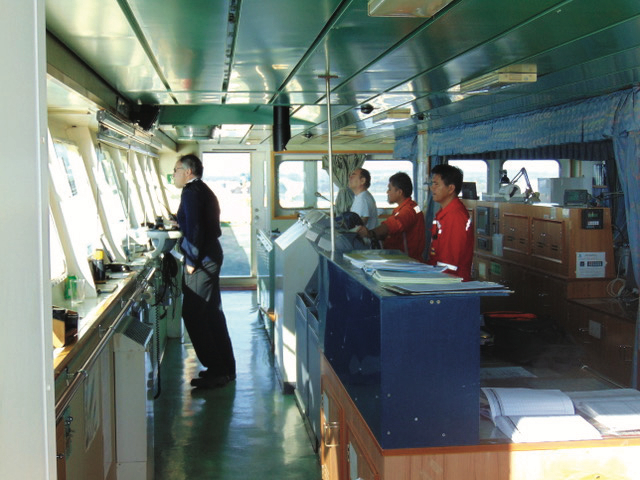
There has over the last few years been considerable discussion about the role of the pilot, not least in the pages of ‘Seaways’. Does he or she have conduct of the vessel, or is the pilot merely an adviser? By definition, a debate has two sides: us and them, pilots and bridge teams.But it shouldn’t be adversarial at all. Pilots and bridge teams are actually on the same side. What both parties want is a successful act of pilotage with the minimum amount of paperwork, hopefully conducted in a pleasant and supportive environment with a mutual respect for each other’s professionalism.
Read the rest of this entry »Pilot Ladder Accident
Agha Umar Habib
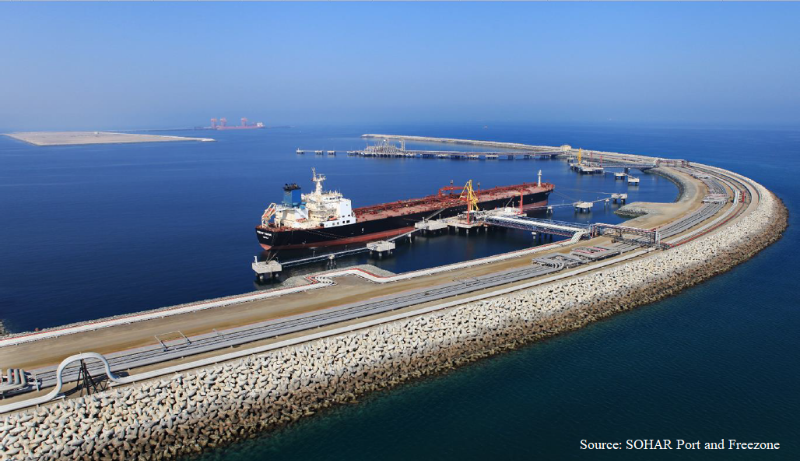
This is a first hand account by a pilot at the port of Sohar, of what it is like when a pilot ladder being climbed, breaks. The article has been kindly reprinted from a post in Linkedin. (Ed).
One never appreciates life unless one encounters death!
My fall in the water on July 23 th , 2019 was an event which re-affirmed my faith in God. The accident was something I had to encounter due to someone else’s negligence. I was gratified to my God for not inflicting any mental or bodily harm to me.
Read the rest of this entry »Defective Passage Plan:
Christian Dwyer & Sophie Henniker-Major


Alize 1954 and CMA CGM SA v. Allianz Elementar Versicherungs AG and others (CMA CGM Libra) (2019) EWHC 481 (Admlty)
In this recent judgment, in the context of a claim by Owners for a contribution in General Average (“GA”), the Court considered whether a defective passage plan, prepared prior to the commencement of the voyage, rendered the Vessel unseaworthy. On the facts, it was found that even though the Owners had in place good safety management practices, the Vessel was unseaworthy on the basis that a prudent owner would not have sent the Vessel to sea with such a defective plan, and that due diligence had not been exercised.
Read the rest of this entry »Pilot Boarding and Landing – use of Personal Emergency Radio Devices: Nick Lee, T&TC Chairman Smith

On behalf of the Association Members the Technical and Training Committee have been investigating the use of Personal Locator Beacons. Read the rest of this entry »
Three Cunard Queens Event: Noel Beckett
Southampton, 10 August 2018

Photo: Courtesy of Ryde Church webcam
Southampton is the home port of all Carnival UK ships, including the three Cunard Queens. Occasionally (who knows whether it is planned or just lucky?), they visit Southampton on the same day. Read the rest of this entry »
Compliant Pilot Ladder Lengths: Kevin Vallance

There are many things in both our everyday and professional lives we take for granted and never question the origins of. An example of this might be the IMPA recommended ‘pilot mark or pilot line’, sometimes seen on the side of vessels to indicate where a vessel’s freeboard exceeds nine metres. Read the rest of this entry »
Another advantage of using a Portable Pilot Unit (PPU)– I say yes: Julian Parkin, (Plymouth)

Error!! Is it the PPU or the chart? Photo: Julian Parkin
My first introduction to a PPU system was initiated when an SHA who I work for as part of my contract with my CHA as a pilot asked a question ‘What is the largest cruise ship we could bring into the port?’ Read the rest of this entry »
‘I’ve got a nice little job for you’ : Martin James

I’m sure every pilot has received a phone call from the pilot office and had these words said to him. Read the rest of this entry »
Pilot Embarkation Platforms: Kevin Valance

Photograph 1: ‘Embarkation platform’.Kevin Vallance
During the transit time on the pilot launch between the shore and the vessel, pilots will spend at least a portion of that time carrying out (either consciously or subconsciously) a risk assessment of the forthcoming operation. Read the rest of this entry »
Cruise Ship Season : Lindsey Wigmore

Having now clocked up 30 years as a Great Yarmouth pilot where the main trades are offshore and coastal ships it was interesting to have the opportunity to do something out of the ordinary – in this case, the cruise liner M.V Seabourn Quest. Read the rest of this entry »

 SITE SPONSORS

 RSS Feed